
If you have ever faced a tray of oysters on ice and wondered how to eat oysters without feeling like a complete beginner, you are in good company. These prehistoric-looking shells and their raw presentation can seem intimidating at first, especially with that one guy at the table who slurps them like a pro.
The good news is that eating oysters is straightforward once you grasp the basics. As experts in Calabash-style seafood at NC Seafood in Raleigh, we guide you through the most popular ways to enjoy them: raw on the half shell, grilled, smoked, canned, and the iconic New Orleans favorite, Oysters Rockefeller.
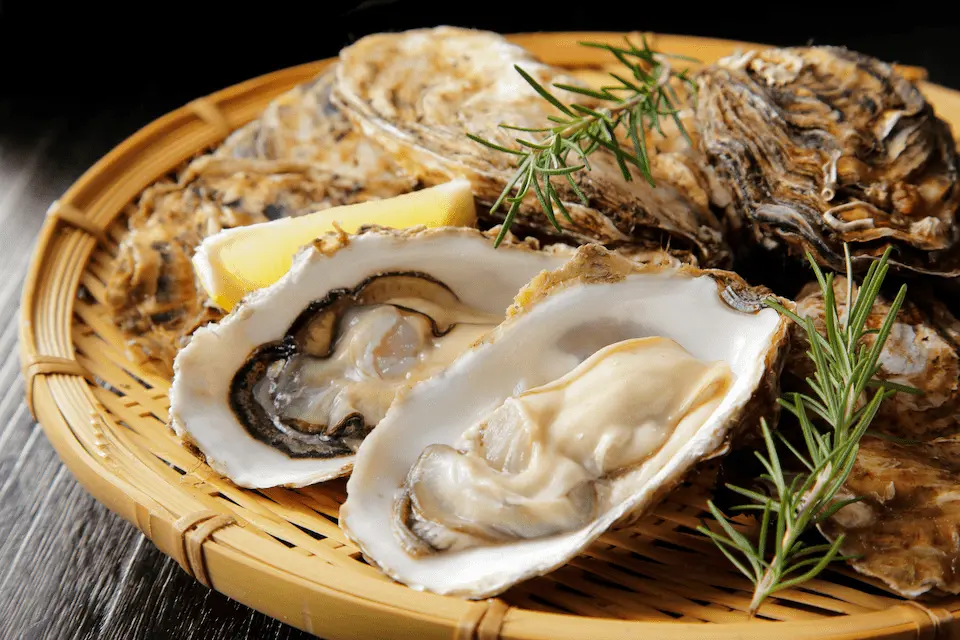
Table of Contents
Why Eating Oysters Is Worth Mastering
Oysters deliver a unique experience. The briny flavor, silky texture, and ritual of sharing them make every bite memorable. They turn a simple seafood platter into a social event.
Unmatched Flavor from Fresh Origins
Oysters offer a clean, briny taste with subtle sweetness that varies by harvest location. The water where they are harvested imparts a signature profile. Some are mild and buttery. Others pack a sharper oceanic punch. Trying them plain first lets you appreciate their natural taste before adding condiments.
Versatile: Raw or Cooked
Enjoy oysters raw, grilled, smoked, fried, or baked. Keep it simple with lemon or load them with sauce, parmesan, and bread crumbs. The variety keeps things exciting.
Nutritional Powerhouse
Oysters provide zinc, iron, vitamin B12, and high-quality protein while staying relatively low in calories.
A Social Ritual
Eating oysters often involves sharing a round, passing sauces like cocktail sauce, mignonette, or hot sauce, and comparing favorites. It becomes a fun, interactive moment at the table.
Oyster Preparation & Serving Guide at a Glance
| Oyster Type | Served Raw or Cooked | Texture | Best Toppings | Best For |
|---|---|---|---|---|
| Raw on the Half Shell | Raw | Silky, briny, fresh | Lemon, mignonette, cocktail sauce, hot sauce | First-time tasting, appreciating natural flavor |
| Grilled Oysters | Cooked | Firm, smoky, buttery | Garlic butter, parmesan, breadcrumbs, lemon | Beginners who prefer cooked seafood |
| Smoked Oysters | Cooked | Rich, salty, smoky | Crackers, cucumber, horseradish cream, hot sauce | Easy appetizers, casual snacking |
| Canned Oysters | Cooked | Soft, savory | Pasta, chowder, dips, stuffing | Cooking and recipes |
| Oysters Rockefeller | Cooked | Rich, creamy, baked | Spinach, herbs, butter, breadcrumbs, parmesan | Comfort food, special occasions |
How to Eat Raw Oysters
Raw oysters remain the classic way to enjoy them, though many feel nervous at first. Served on crushed ice with lemon and sauces, they come with a small fork for loosening the meat.
Step 1: Ensure Freshness
A fresh oyster should have an unopened shell when it arrives or close quickly if tapped. The meat looks plump, moist, and glistening, with a clean ocean smell and no fishy or off odors. Discard any with broken shells or that stay open. For extra confirmation, a quick squeeze of lemon on the shucked meat should make it contract slightly if it is fresh and alive.
Step 2: Add a Touch of Lemon
Squeeze a drop or two of lemon over the oyster. This brightens the briny flavor without overpowering it. Stick to just a little and let the oyster’s natural taste shine.
Step 3: Choose Your Sauce
Options abound, with no wrong choice:
Cocktail sauce ↓
Classic tangy tomato base, often with horseradish for bite.
Mignonette ↓
Vinegar and shallots for a sharp, clean lift.
Hot sauce ↓
A quick drop for heat lovers.
Horseradish ↓
Extra kick on its own.
Start simple: one plain, one with lemon, one sauced.
Step 4: Loosen the Meat
Use the small fork to gently separate the oyster from the shell if it is attached. Keep the oyster liquor, that delicious natural liquid, in the shell. Do not drain it off.
Step 5: The Proper Slurp
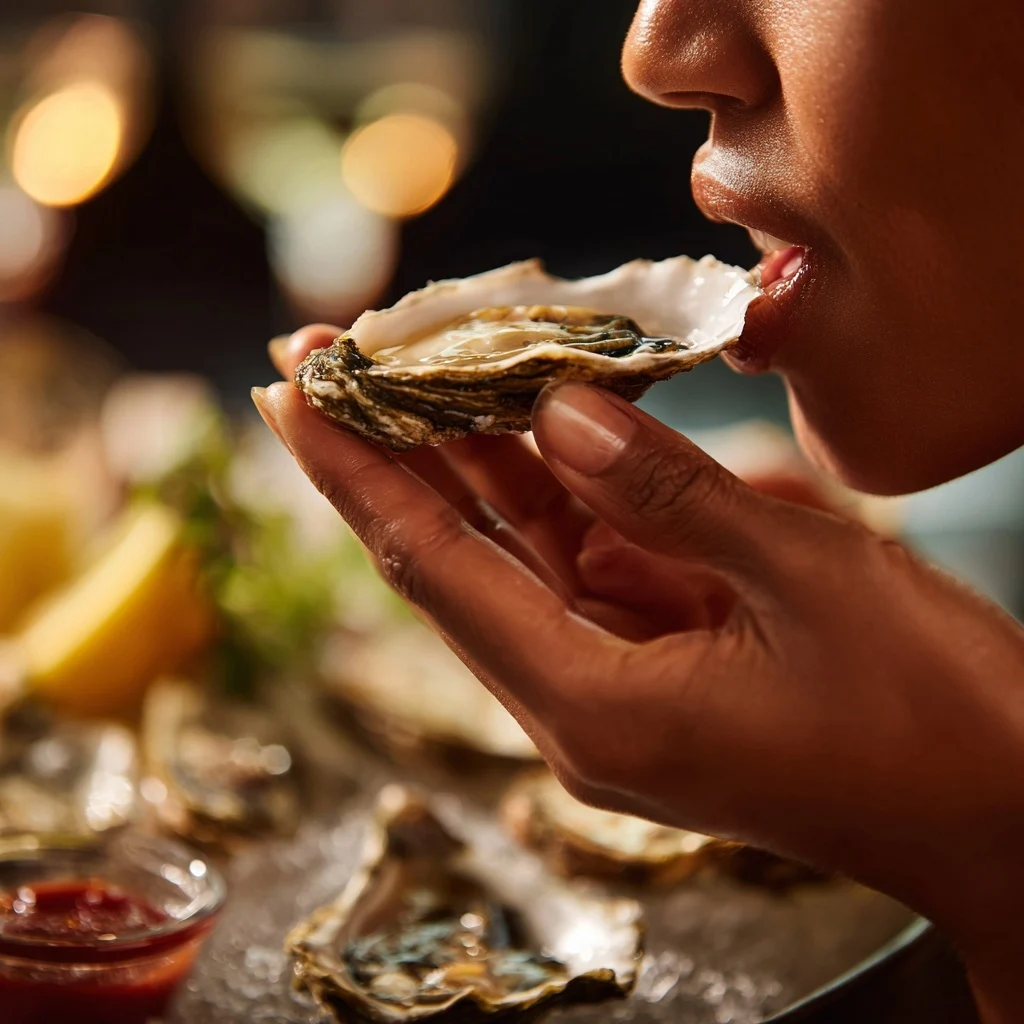
Raise the wider edge of the shell to your lips. Gently tip it back so the oyster and its juices slide into your mouth. Keep your lips close to avoid spills. Everyone misses occasionally. It is part of the fun.
Step 6: Chew and Savor
Slurp, then chew two to three times to release the full flavor and texture. Swallow after savoring. Avoid swallowing whole. You will miss the best part.
Once finished, discard the empty shell. Many people place it face-down on the tray to signal they are done.
Tip: Practice at home or a welcoming spot to build confidence. Enjoying only fresh oysters sets you up for success.
Popular Toppings for Oysters on the Half Shell
Keep the oyster sauce light. The oyster’s delicate flavor deserves to lead.
Classic cocktail sauce with horseradish ↓
Familiar and tangy.
Mignonette ↓
Sharp and elegant. Chefs often recommend it to highlight true taste.
Hot sauce ↓
One small drop adds punch without flooding the shell.
How to Eat Grilled Oysters
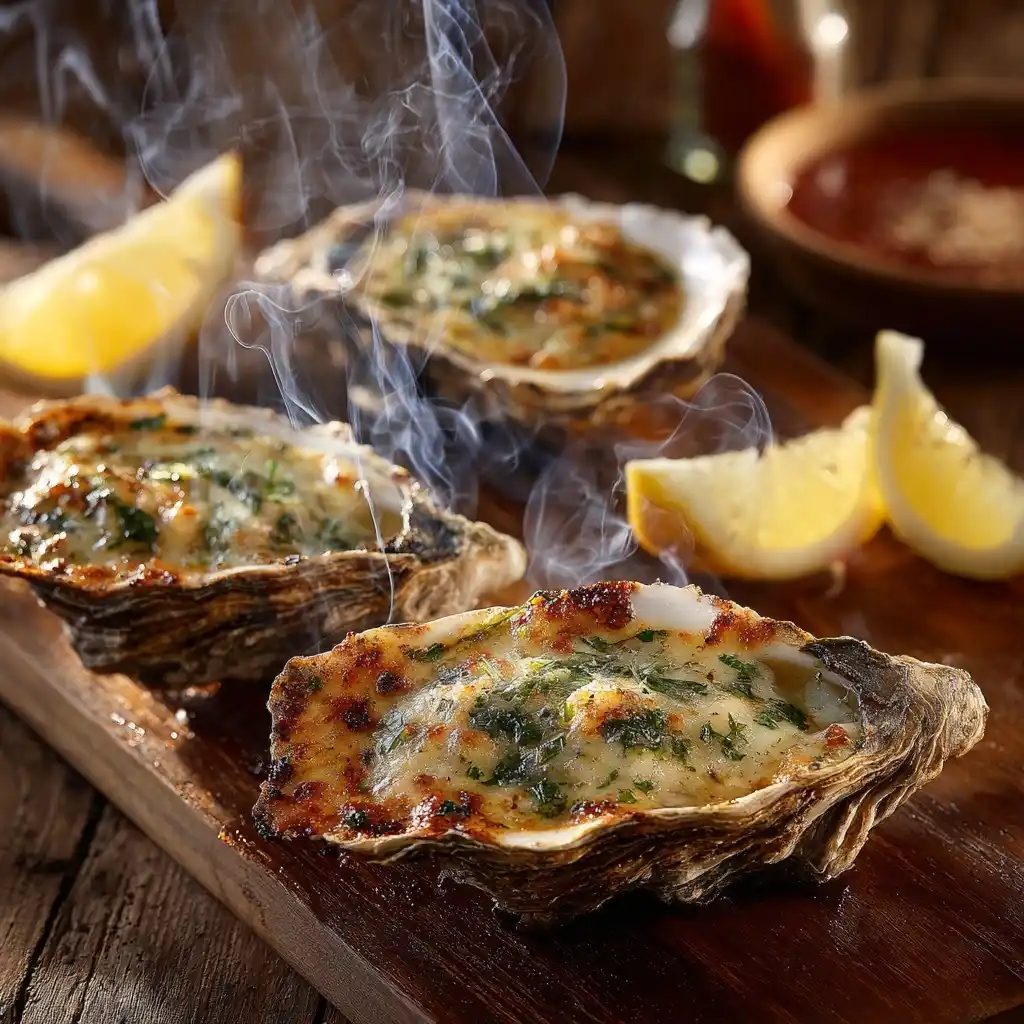
Grilled oysters offer a perfect introduction for newcomers. Grilling firms the texture, adds smokiness, and pairs with bold toppings.
Expect them served in the shell, topped with garlic butter, parmesan, or bread crumbs. They are often New Orleans-style, buttery and messy in the best way.
Best Toppings
– Garlic butter
– Parmesan
– Hot sauce
– Lemon
How to Eat Smoked Oysters
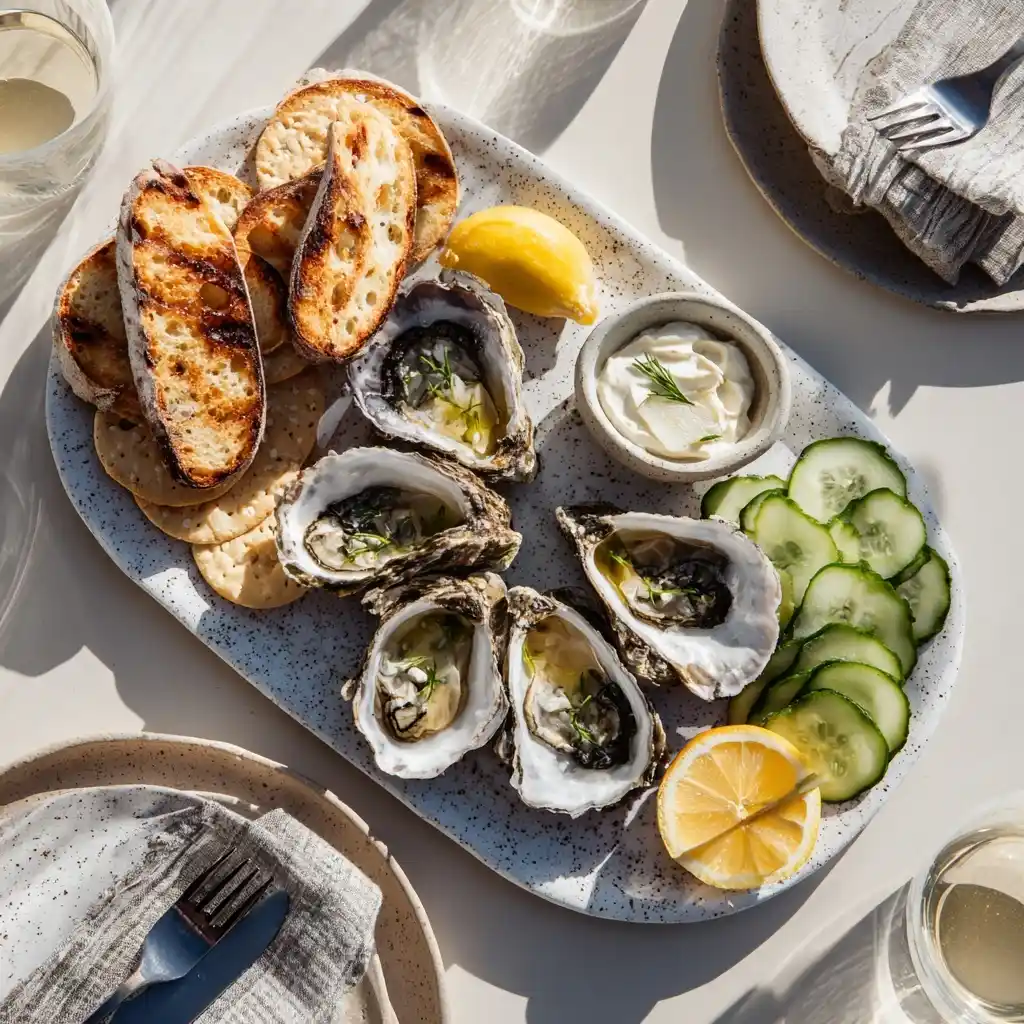
Smoked oysters bring salty, smoky richness packed in oil. They are ideal for casual snacking.
Open the can, drain excess oil, and plate them simply. Pair with crackers, toasted bread, cucumber slices, or a lemon squeeze. Add horseradish cream or hot sauce for extra flavor. They are an effortless appetizer.

How to Eat Canned Oysters
Canned oysters shine as a kitchen staple rather than a standalone snack.
Drain and rinse if desired for milder taste, then add to recipes like creamy chowders, seafood pasta, dips, or stuffing. They bring briny depth with minimal effort.
How to Eat Oysters Rockefeller
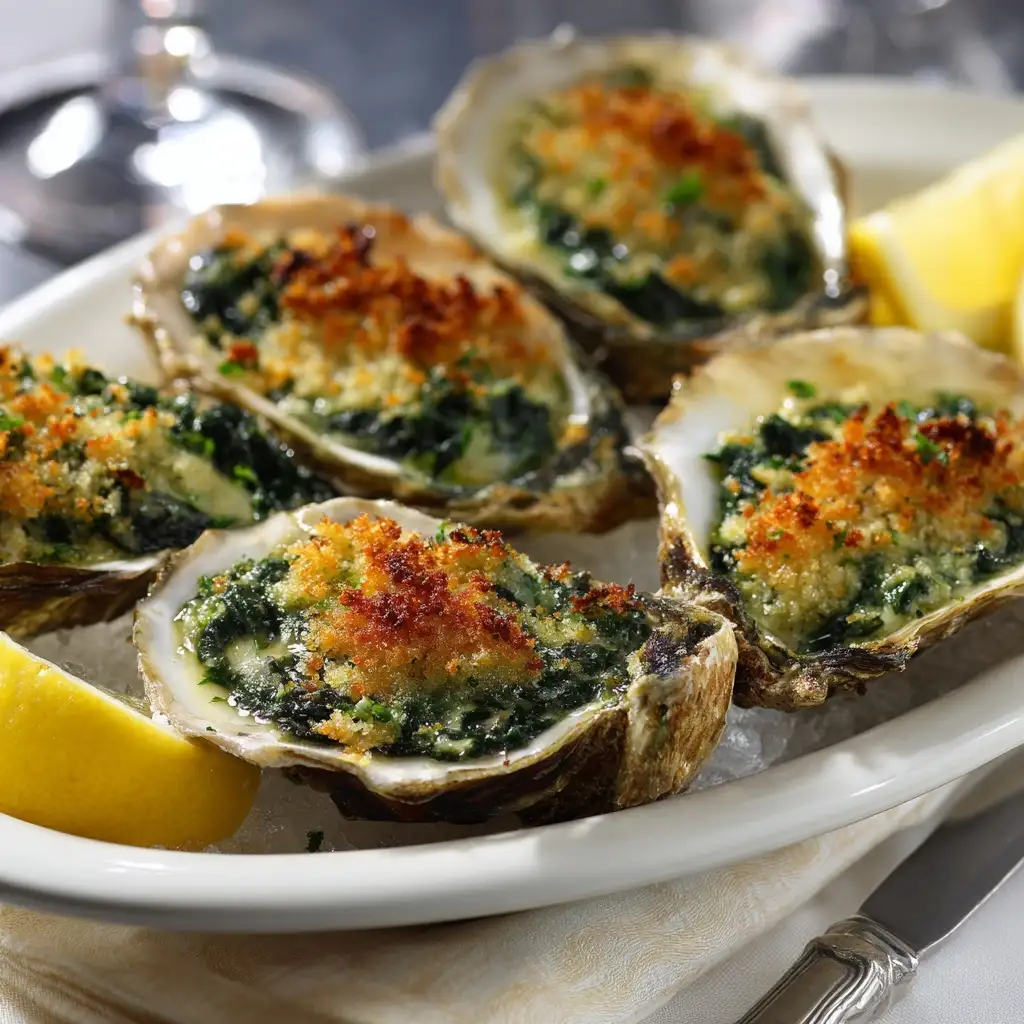
Oysters Rockefeller elevate oysters to comfort food. This New Orleans classic bakes them with rich toppings until golden and bubbling.
Traditional ingredients include butter, herbs, spinach or greens, and bread crumbs. Elevate with parmesan, extra crumbs for crunch, or hot sauce.
New Orleans boasts a vibrant oyster culture. Fresh Gulf oysters are a staple, enjoyed raw, charbroiled, or Creole-style. Spots like Gallier’s Restaurant & Oyster Bar capture that social energy with raw, charbroiled, and signature preparations. Walking into a French Quarter oyster bar reveals lively traditions that have defined the city’s culinary DNA for centuries.
Wine Pairings to Elevate Your Oysters
Crisp, acidic whites cut through the brininess beautifully:
Sauvignon Blanc or Pinot Grigio ↓
Bright and refreshing.
Chablis or Sancerre ↓
Mineral-driven classics.
Crisp Champagne ↓
Bubbles add celebratory contrast.
These wine pairings enhance raw or grilled oysters without overwhelming their natural flavor.
Important Safety Note for Raw Oysters
While fresh oysters from reputable sources are generally safe, raw oysters can carry risks such as Vibrio bacteria, especially in warmer months. High-risk individuals, including pregnant people, older adults, and those with weakened immune systems, should avoid raw oysters or choose cooked preparations instead. Always source from trusted suppliers and enjoy them at peak freshness.
How to Eat Oysters FAQs
What is the correct way to eat an oyster?
+
Loosen if needed, add lemon or sauce lightly, raise the shell to your lips, tip back to slurp the oyster and liquor, chew a few times to savor, then swallow.
Do you swallow oysters whole or chew?
+
Chew a couple of times. It releases more flavor and lets you enjoy the texture fully. Swallowing whole skips the best part.
What is the rule for eating oysters?
+
Prioritize fresh ones served cold on ice. Use condiments sparingly, and do not let them warm up. Enjoy them at peak freshness.
Why do I feel buzzed after eating oysters?
+
The nutrient surge, especially zinc, combined with social settings or alcohol can create an intense, lively feeling. If it feels off or unwell, stop and check in.
Visit NC Seafood in Raleigh Today
At NC Seafood, we feature fresh Calabash-fried oysters alongside our full menu—favorites that keep Raleigh locals and visitors returning.
Place an order online or visit NC Seafood in person—and if you want more recipes, seasonal seafood posts, and local Raleigh happenings, sign up for our monthly e-newsletter. It’s sent once a month, and useful for planning a visit to the State Farmer’s Market.