
St. Patrick’s Day often brings corned beef, cabbage, and green-themed drinks to mind, but in Ireland, seafood has always been at the heart of everyday cooking. Surrounded by the Atlantic Ocean, Ireland developed a deep culinary tradition built around fresh fish, shellfish, and creamy seafood-based soups and stews. Cod, haddock, salmon, mussels, oysters, shrimp, and smoked fish have long been staples in Irish kitchens.
What makes Irish seafood especially interesting for North Carolina diners is how naturally it connects to our own coastal food culture. The same emphasis on fresh seafood, simple ingredients, and comforting recipes exists here. Whether it’s a chowder simmering on the stove or battered fish frying in a pan, Irish seafood recipes translate beautifully to local, fresh-caught seafood from our coast.
If you’re planning a Patrick’s Day meal or simply looking for new ways to enjoy seafood, these Irish-inspired dishes offer rich flavor, tradition, and plenty of warmth.
Table of Contents
Irish Seafood Chowder: A Cultural Staple
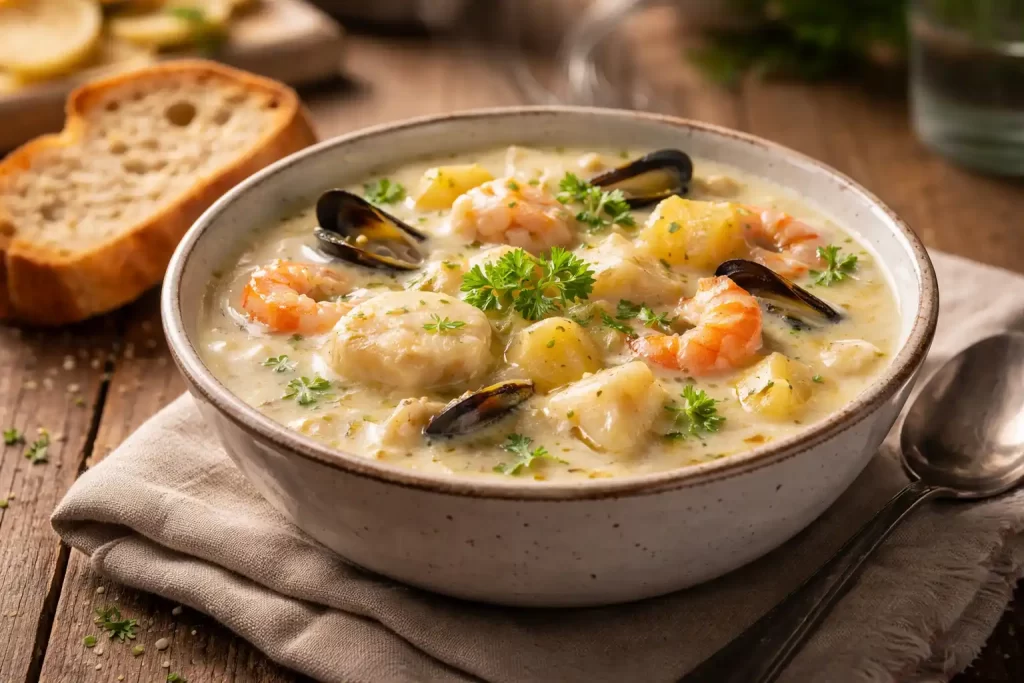
One of the most iconic Irish seafood dishes is Irish seafood chowder. Found in restaurants and homes across Ireland, this dish combines fresh seafood with potatoes, vegetables, cream, and seafood stock to create a rich, satisfying soup.
Irish seafood chowder typically includes:
- Cod, haddock, salmon, or smoked fish
- Mussels or oysters
- Shrimp
- Potatoes cut into large chunks
- Onion, celery, and carrots
- Butter and flour to form a base
- Heavy cream added near the end
- Fresh herbs such as thyme or parsley
The chowder starts in a large saucepan over medium heat. Butter is melted, vegetables are added, and flour is stirred in to form a base. Seafood stock or vegetable stock is gradually mixed in, followed by potatoes. The mixture is brought to a gentle boil, then reduced to a simmer. Once the vegetables are tender, the seafood is added and cooked until fully cooked but still tender. Cream is stirred in last to create that signature creamy broth.
Chowder is often gently reheated rather than boiled again, preserving both texture and taste. Served with bread and a light garnish of parsley or chives, it remains one of Ireland’s most beloved seafood traditions.
Irish-Inspired Seafood Recipes You Can Make at Home
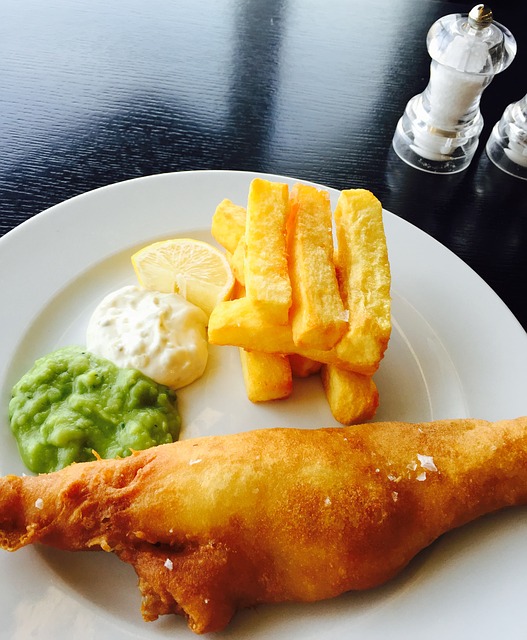
Guinness-Battered Fish & Chips
This recipe is Irish to the core: Guinness, cod, and potatoes coming together in one delicious dish.
Ingredients
For the Fish:
- 4 cod fillets
- ½ can Guinness draught
- 1 ¾ cups flour
- 1 tablespoon baking powder
- Dash of salt
- Dash of black pepper
- Vegetable oil for frying
For the Chips:
- Salt and pepper
- 4 large potatoes, peeled and cut into strips
Directions
In a large mixing bowl, pour the Guinness, flour, baking powder, salt, and pepper. Whisk until the mixture is smooth and slightly frothy. Let the batter rest for 15 minutes to improve texture.
Heat vegetable oil in a pan over medium high heat. Dust each cod fillet lightly with flour before dipping into the batter. Carefully place into the hot oil. Cook each side for about 5–6 minutes until golden brown and fully cooked. Remove and drain on paper towels.
Place potato strips in cold water to remove excess starch. Fry in batches until tender and lightly crisp. Season generously with salt and pepper.
Serve with tartar sauce and lemon wedges for a classic Irish seafood experience.
Recipe Notes for Fish & Chips
For extra flavor, mix a quick tartar sauce with minced garlic, black pepper, salt and pepper, and a squeeze of lemon. Serve with lemon wedges and top with chopped chives and green onions if you like a brighter finish.
Nutrition calories vary based on portion size and how much oil is absorbed during frying.
Irish Seafood Stew
Irish seafood stew reflects the same comfort as chowder but with a lighter broth and larger seafood pieces.
Ingredients
- 2 tablespoons unsalted butter
- 2 medium onions, chopped
- 3 bacon slices, chopped
- 2 bay leaves
- 2–3 sprigs fresh thyme or dried thyme
- 3–4 potatoes, diced
- 8 ounces clam juice or seafood stock
- Salt and pepper
- 2 pounds fresh fish (salmon, cod, shrimp, or shellfish), cut into small pieces
- 2 cups heavy cream
- ½ cup milk
- 1 tablespoon fresh parsley
Directions
Melt butter in a large pot over medium heat. Add onion and cook until slightly softened. Stir in bacon and cook until fully cooked. Add thyme, bay leaves, and potatoes. Cook for a few minutes while stirring occasionally.
Pour in the seafood stock and season with salt and pepper. Bring to a boil, then reduce heat and simmer until potatoes are tender. Add seafood and cook gently for about 5 minutes.
Stir in cream and milk. Taste and adjust seasoning. Garnish with parsley before serving.
Fisherman’s Pie
Similar to shepherd’s pie, fisherman’s pie layers seafood in a creamy sauce beneath mashed potatoes.
Ingredients
- 2 pounds cod or white fish
- 3 tablespoons olive oil
- ⅔ cup white wine
- 1 tablespoon dill
- 1 ¼ cups mushrooms
- 6 tablespoons butter
- ½ pound NC shrimp
- ¼ cup flour
- ½ cup heavy cream
- 2 pounds potatoes
- Salt and pepper
Directions
Bake fish with wine and dill until flaky. Cook mushrooms and shrimp in a pan. Reserve cooking liquid.
In a saucepan, melt butter, stir in flour, and gradually add the reserved liquid while stirring. Add cream and season.
Layer fish, mushrooms, shrimp, and sauce in a baking dish. Top with mashed potatoes mixed with butter, salt, and pepper. Bake until golden and tender.
Irish Seafood Beyond Chowder
Irish seafood cooking extends far beyond soups and stews. Smoked fish platters, seafood pies, and shellfish-based soups are common across Ireland’s coastal towns. Mussels steamed in white wine and garlic, oysters served fresh with lemon, and simple salmon dishes reflect Ireland’s respect for quality seafood.
In some Irish coastal restaurants, you’ll see lobster served in a simple cream sauce, and you’ll also find comfort-food favorites like coddle (often made with sausage and potatoes) alongside seafood dishes on Patrick’s Day menus.
Why Irish Seafood Works So Well with North Carolina Fish
The waters off North Carolina provide fresh fish that mirrors many of the species found in Irish cooking traditions. Cod, shrimp, shellfish, and salmon all translate naturally into Irish recipes. By combining Irish techniques with fresh local seafood, you create dishes that feel both traditional and regional.
Frequently Asked Questions
What is Irish seafood chowder?
+
Irish seafood chowder is a creamy, hearty soup made with seafood stock, potatoes, onion, celery, and carrots, finished with cream or heavy cream. Many versions use a mix of fresh fish like cod or haddock and add shrimp, mussels, oysters, or smoked fish.
When do you add seafood to chowder?
+
Add the seafood near the end of cooking. Once the vegetables are tender, reduce heat and add the fish and shellfish in small pieces. Let it simmer briefly so everything becomes fully cooked without turning rubbery.
What kind of bread goes with Irish seafood chowder?
+
Irish seafood chowder is often served with crusty bread or brown bread. It’s a simple pairing that works well with the creamy broth.
Can I adapt Irish seafood chowder with whatever fresh fish I find in North Carolina?
+
Yes. Irish seafood chowder is easy to adapt using your favorite fresh fish from the local seafood market. Cod and haddock are classic, salmon adds richness, and smoked fish adds a deeper flavor.
Does Irish seafood chowder have a long history?
+
Yes. Chowders have been made for centuries in coastal communities and became a practical way to use fresh seafood with potatoes and vegetables in one pot, especially in colder months.
Enjoy Fresh Irish-Inspired Seafood at the NC Farmers Market Restaurant
Feeling inspired to try Irish seafood but don’t want to cook? Visit the NC Seafood Restaurant at the NC Farmers Market in Raleigh, NC. We serve fresh seafood daily and celebrate coastal flavors that connect beautifully with Irish traditions.
Join us for Patrick’s Day or anytime you’re craving seafood prepared with care and experience. Whether it’s chowder-style comfort, crispy fish and chips, or classic seafood dishes, our menu reflects the same values found in Irish seafood cooking: fresh fish, simple ingredients, and great taste.
Éirinn go Brách!